
Neck Pain & Sleep Position
What the Studies Show About Pillows & Alignment
Most people don't connect their morning neck pain to what happened during the night.
When they wake up sore, the “blame games” often begin.
Is it poor work posture, their gym session from the previous day, or the most common culprit – ageing?
In many instances, we can trace neck pain to sleep position and inadequate pillow support. It is often a pillow they've been sleeping on for years — and the position they spend six to eight hours in every night.
This isn't anecdote. Research backs it up.

What the Research Actually Shows
A 2019 study published in the Journal of Manipulative and Physiological Therapeutics found that pillow height (loft) directly affected neck (cervical spine) alignment during sleep, and that poor alignment correlated with increased pain and disturbed sleep, in participants with chronic neck complaints. The sweet spot isn't the same for everyone, but the research points clearly toward one principle: your pillow needs to keep your neck in a neutral position. Not propped up or tilted down.
A separate study in Sleep Health compared pillow types across back and side sleepers, and it found that contoured cervical pillows consistently outperformed standard foam or feather pillows on pain reduction scores. What made the difference wasn't firmness alone — it was the ability to maintain the natural curve of the neck throughout the night.
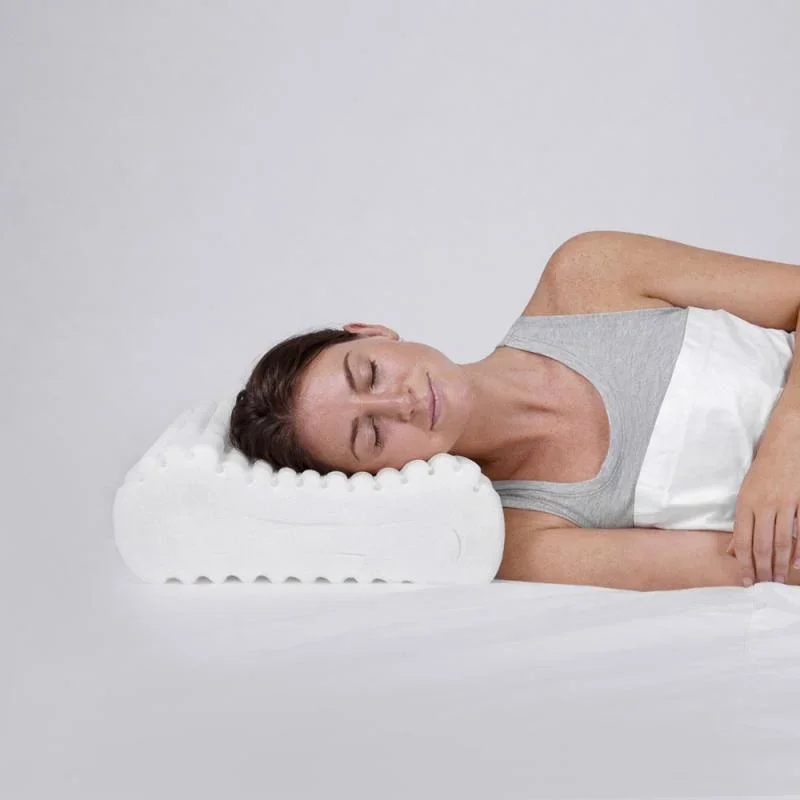
Side sleepers generally need more loft than back sleepers to keep their head level with their spines.
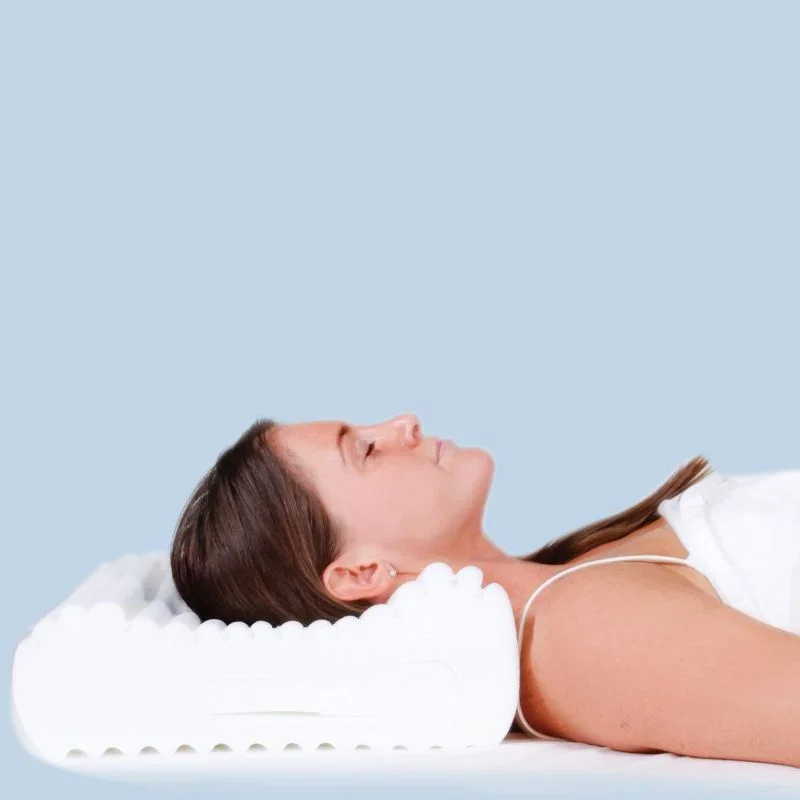
Back sleepers will do best with something a bit thinner that supports the natural curve of the neck. Typically, a lower, firmer pillow is often the best set-up.
And stomach sleepers? The evidence here is clear: sleeping face down rotates the cervical spine for hours at a time. Studies consistently link this position to more neck pain, not less. If you're a stomach sleeper and you wake up stiff most mornings, that's almost certainly why.
The Pillow Problem Most People Miss
The issue isn't always the wrong type of pillow — sometimes it's a pillow that was fine twelve months ago and has since lost its structural support. Foam and micro fill will both compress and lose density over time. A pillow that started at the right loft for your shoulder width gradually flattens, and your cervical spine compensates all night without you realising it.
General guidance from the research: check your pillow's support every 12–18 months. If you can fold it in half and it stays folded, it's not supporting you anymore.
What to look for when choosing the best pillow:
· Side sleepers need a higher-loft pillow (roughly equal to the distance between the ear and the outside of the shoulder).
· Back sleepers do better with a medium-loft pillow that has a slight contour to support the neck curve — not something that pushes the chin toward the chest.
· Memory foam and latex tend to hold shape better than polyester fill over time.
· Check out our range of height adjustable pillows here.
Small Adjustments, Meaningful Difference
Beyond the pillow itself, a few positioning habits consistently show up in the literature as helpful:
· Back sleepers – consider placing a small pillow or rolled towel under your knees.
· Side sleepers – consider placing a small pillow or rolled towel between your knees. Using a decent quality body pillow can also be very helpful.
These positions both take tension and rotation out of your spine and pelvis.
· Keep off your phone in bed (so you're not straining your neck before trying to go to sleep). Staying off your device before going to sleep also has clear connection to improved sleep quality and quantity.
· And if you're already dealing with neck pain, sleeping on your back rather than your side may be worth trialling for a few weeks, since the evidence slightly favours it for reducing overnight cervical load.
None of this is the silver bullet. But cumulatively, these adjustments add up across hundreds of hours of sleep.

If You're in Sydney, Here's the Next Step
If you've read this and thought "this actually sounds like me" — the morning stiffness, the persistent ache that never quite goes away — it might be worth having someone actually look at how you sleep.
At Sydney Spine and Sports Clinic located in Pagewood, we see this pattern regularly. A sleep posture and cervical spine assessment takes around 15–20 minutes and can tell you a lot about whether what's happening at night is driving what you feel during the day. We'll look at your cervical range of motion, your posture habits, and help you figure out whether your pillow setup is working for you or against you.
No referral is needed. No hard sell.
If you're local to the Pagewood, Maroubra, or Botany area and want to sort this out properly, book in online or give us a call. It's one of those things that's much easier to fix early.