
Why Does Your Mid Back Mobility Matter?
March is Mobility Month at Sydney Spine and Health Clinics, and if you spend most of your day sitting at a desk, there’s one area of your body that deserves some extra attention: your thoracic spine.
Most people focus on lower back or neck pain, but sometimes the thoracic spine is the area where this pain can start from.
The thoracic spine is the middle section of your back, starting from the base of your neck and running right between the shoulder blades. It plays a huge role in posture, breathing, and it can affect how well your body moves and functions.
Long hours at a desk often lead to stiffness in this area, which can force the neck, shoulders and even the lower back to compensate. Over time, this can contribute to neck pain, headaches, and upper back discomfort.
The good news? Improving mobility through chiropractic treatment and exercises in this area can help relieve pressure on the neck and improve overall movement.
Let’s look at why thoracic mobility matters and a few simple exercises you can incorporate into your daily routine.
Why Thoracic Mobility Helps Reduce Neck Pain
When this area becomes stiff from prolonged sitting or poor posture, the body often compensates by increasing movement through the neck.
This can lead to:
· Increased strain on neck muscles
· Poor posture such as forward head position
· Tight shoulders and upper back
· Headaches/migraines and neck discomfort
By improving mobility in the thoracic spine, you allow your body to move the way it was designed, reducing the load placed on your neck.
Think of it as sharing the workload across the spine rather than forcing the neck to do all the work.
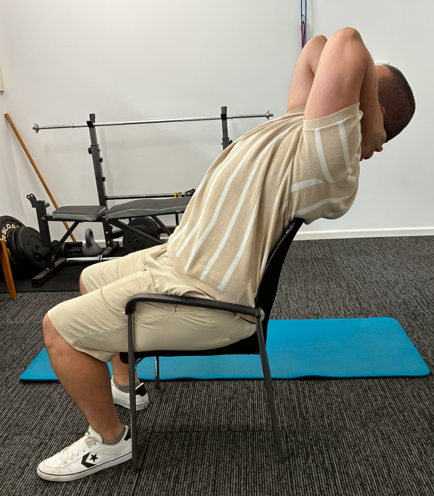
1. Thoracic Extension Over a Chair
This exercise helps reverse the rounded posture that often develops when sitting.
How to do it:
1. Sit in a chair with a backrest that reaches your midback.
2. Place your hands behind your head for support.
3. Gently lean back over the chair, opening your chest toward the ceiling.
4. Hold for 5–10 seconds, then return to neutral.
Repeat: 6–8 times.
Benefits:
· Opens the chest
· Improves spinal extension
· Reduces upper back stiffness
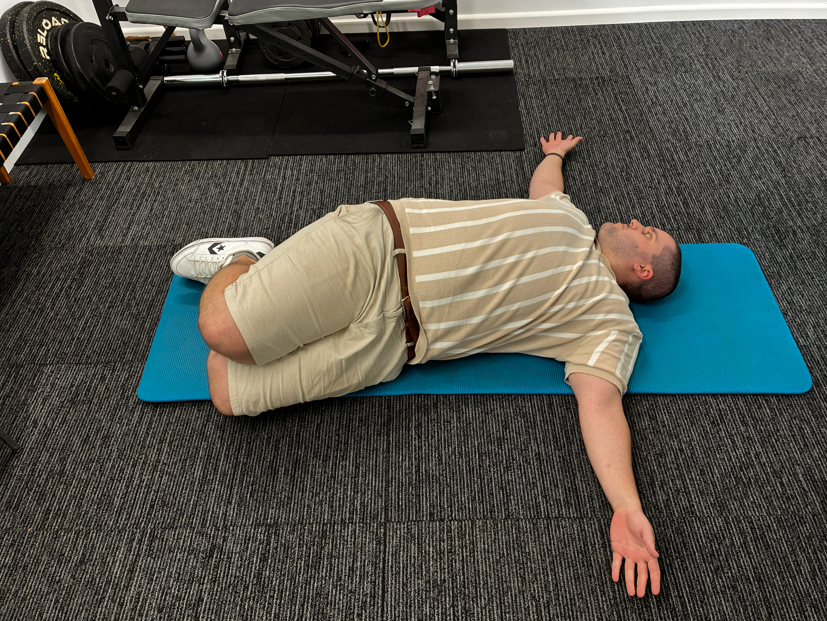
2. Open Book Rotations
This exercise improves thoracic rotation, which is often restricted in desk workers.
How to do it:
1. Lie on your side with knees bent and arms extended in front of you.
2. Keep your knees stacked.
3. Slowly open your top arm across your body, rotating your chest toward the floor behind you.
4. Follow your hand with your eyes.
5. Return to the starting position.
Repeat: 8–10 times each side.
Benefits:
· Improves spinal rotation
· Reduces stiffness through the mid-back
· Encourages better posture
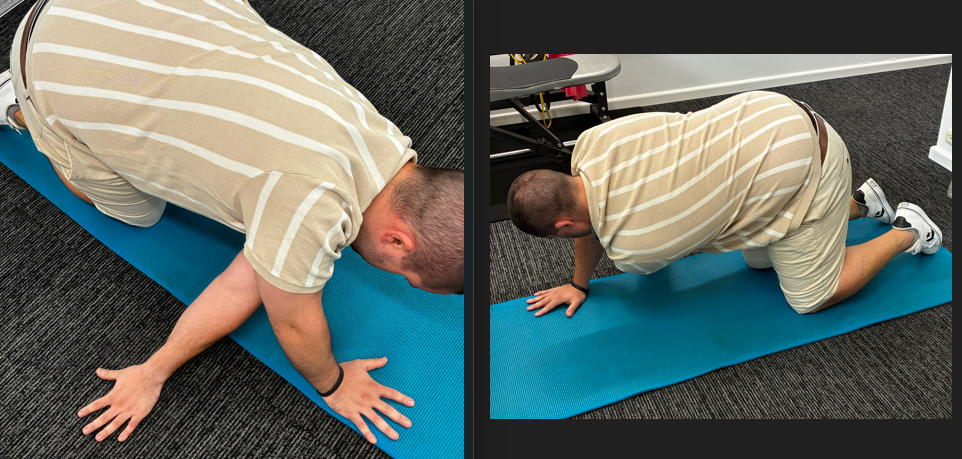
3. Thread the Needle
This movement combines rotation and stretch through the upper back.
How to do it:
1. Start in a hands-and-knees position.
2. Slide one arm underneath your body, rotating through your upper back.
3. Lower your shoulder toward the floor.
4. Hold briefly, then return to the start.
Repeat: 8–10 times each side.
Benefits:
· Improves thoracic mobility
· Relieves upper back tension
· Encourages spinal movement in multiple directions
Small Changes Make a Big Difference
Thoracic mobility exercises don’t need to take long to be effective. Even a few minutes during your workday or while you have some downtime, can help counteract the effects of prolonged sitting.
Try setting up a reminder to move every 60–90 minutes and incorporate one or two of these exercises into your break.
Your body will thank you for it.
Moving Better Starts With Mobility
Improving thoracic mobility is one of the simplest ways to support better posture, reduce neck strain, and move more comfortably throughout the day.
As part of March Mobility Month at Sydney Spine and Sports Clinic, we encourage you to start incorporating these movements into your routine and priorities movement throughout the day.
If you’re experiencing ongoing neck or back discomfort, working with a chiropractor can help identify the underlying cause and develop a personalised mobility plan.
Make March Your Mobility Reset
Mobility Month is the perfect time to start prioritising how your body moves.
If desk work is leaving you with a stiff upper back or a tight neck, our team can help you improve your thoracic mobility and reduce the strain that sitting places on your spine.
With many people now working from home, desk set ups might not be the most ergonomic to promote good back health. This might be a great chance for you to assess together your desk set up to set you up for mobility success.
👉 Book your mobility assessment this month and start moving with less pain and more freedom.